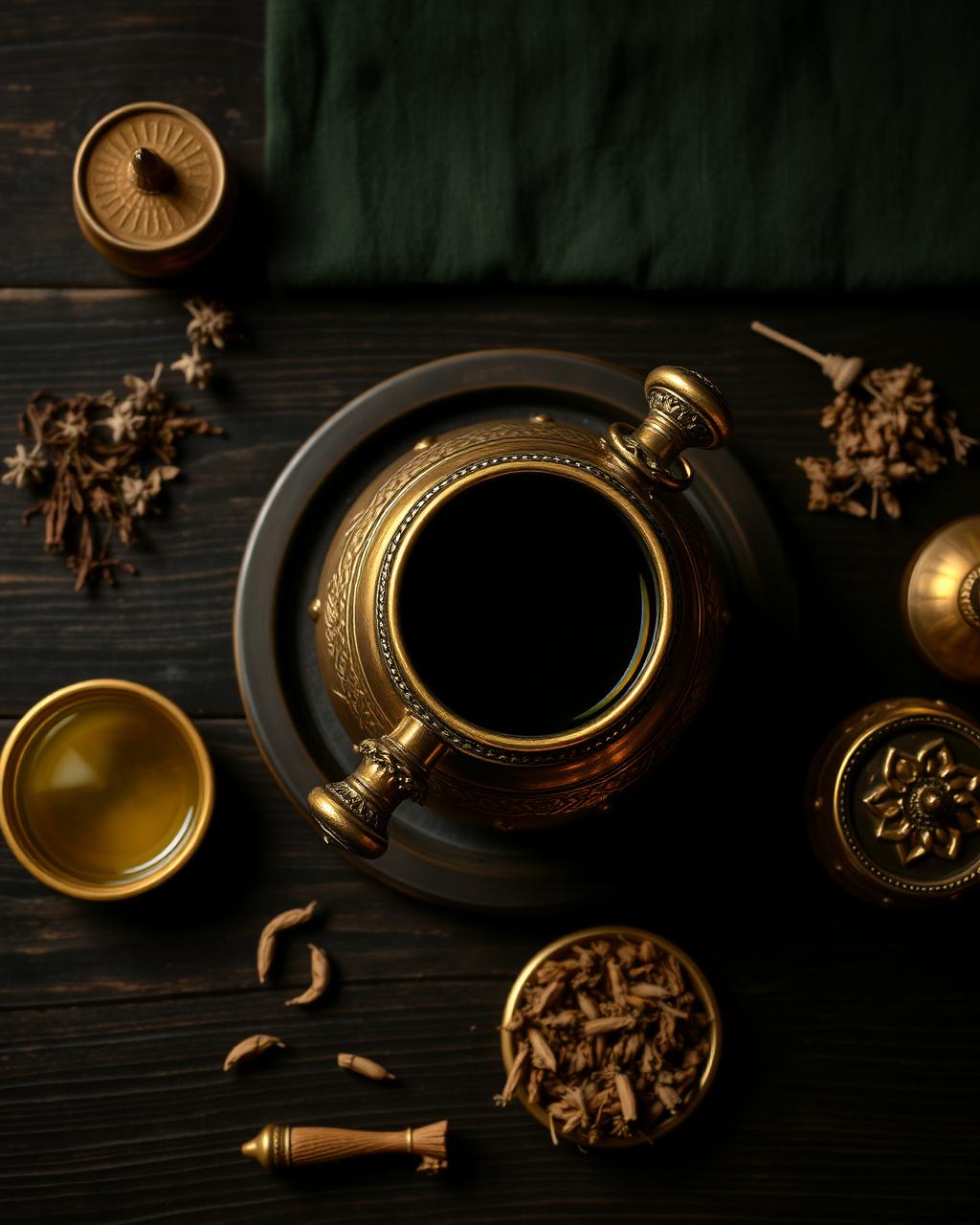
Panchakarma is not a treatment you select from a menu. It is a medically supervised sequence — preparation, purification, and rebuilding — designed around one body, one constitution and one set of complaints. At Niramayam, in Cherpu near Thrissur, that sequence is carried out the way Kerala's physician families have always carried it out: slowly, residentially, and under daily review.
What Panchakarma actually involves
The word means five actions. Vamana, Virechana, Basti, Nasya and Raktamokshana are the classical five, and almost no guest receives all of them. Your physician prescribes one or two, chosen for your dosha pattern and your condition, and surrounds them with the preparatory and restorative work that makes them safe and lasting.
Purvakarma — preparing the body
Internal medicated ghee, external oil therapies such as abhyanga, pizhichil and kizhi, and herbal steam loosen accumulated waste from the deep tissues and move it toward the digestive tract. This phase usually runs three to seven days and is the part that short commercial detox packages quietly leave out.
Pradhanakarma — the purification itself
The main procedure is short — often a single supervised day — and followed by complete rest. Done at the right moment, it is far less dramatic than most guests expect.
Paschatkarma — rebuilding
A graduated diet, rebuilding therapies, herbal medicines, yoga and quiet restore digestive fire and strength. This phase decides whether the results hold once you return home.
Why Panchakarma in Kerala is different
Kerala is the one place where Ayurveda never became a memory. The climate keeps the pores open, the herbs grow locally, the oils are prepared in the traditional way, and therapists train for years under senior Vaidyas rather than for weeks in a spa academy.
- ◆Physician-led: you are seen and reassessed every day, not once at arrival.
- ◆Residential: treatment, food, rest and rhythm are one continuous programme.
- ◆Traditionally prepared medicines and oils rather than off-the-shelf products.
- ◆Two trained therapists for classical Kerala therapies such as pizhichil and dhara.
- ◆A heritage Mana setting — quiet, sheltered, and part of the medicine itself.
How long a programme should be
A meaningful Panchakarma runs fourteen to twenty-eight days. Seven to ten days can deliver genuine preparatory therapy and rest, and is often the right first step for someone who cannot yet take longer away. What we will not do is compress purification into three days and call it Panchakarma.
Conditions we most often treat
- ◆Chronic joint and spine pain, arthritis, sciatica and disc-related complaints
- ◆Skin conditions including psoriasis and chronic eczema
- ◆Stress, anxiety, burnout and long-standing sleep disturbance
- ◆Digestive and metabolic disorders
- ◆Neurological and post-stroke rehabilitation
- ◆Gynaecological concerns including PCOS and menstrual irregularity
A day inside the programme
Mornings begin early with herbal medicines and a light prescribed breakfast, followed by two to three hours of oil therapy, steam and rest. Afternoons are deliberately empty. Yoga and breathing come late in the day when the body is warm. Evenings are for simple food, silence and sleep — and every day includes a physician review.
The purification is one day of the programme. The other twenty-seven days are what make it work.
Frequently asked questions
Cost depends on programme length, room type and the therapies prescribed after assessment. We quote only after an initial consultation so that the figure reflects a real plan rather than a package. Write to us and we will send an honest estimate.
Medical note. Ayurvedic treatment at Niramayam is prescribed individually after an in-person assessment by a registered Ayurveda physician. Nothing on this page is a diagnosis or a promise of outcome, and no existing medication should be stopped or altered without the guidance of your treating doctor.
Continue exploring
Begin with a conversation, not a booking
Tell our physicians what has been troubling you. They will tell you honestly whether Panchakarma is the right answer, and how long it would take.
Speak with a physician