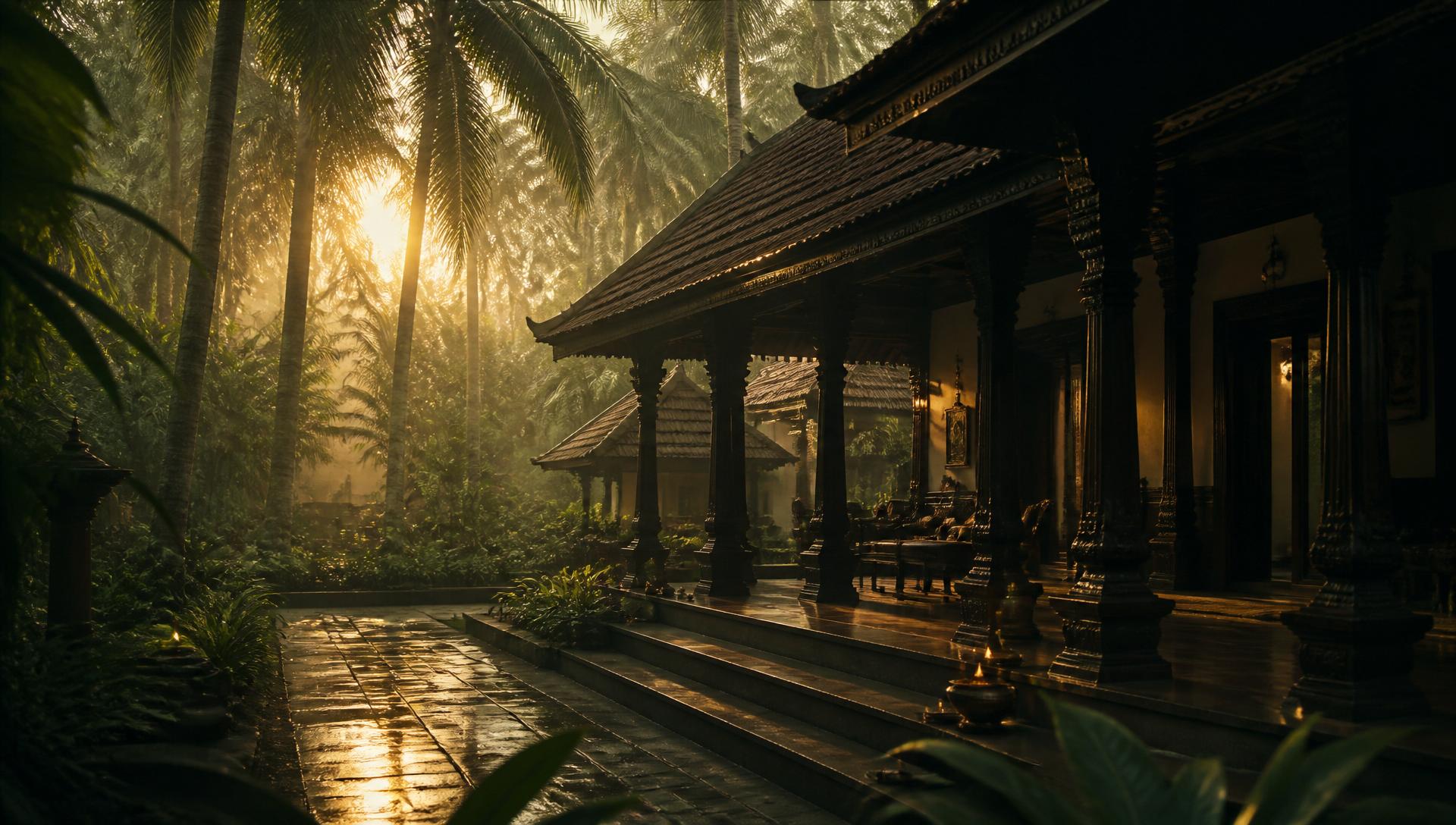
A Mana is more than a large old house. It is a way of organising life around courtyards, kitchens, shade and water — and, in certain families, around the practice of medicine.
Kerala architecture, briefly
- ◆Nadumuttam — the open inner courtyard that lights and cools the house
- ◆Steep tiled roofs designed for monsoon rain
- ◆Laterite walls and carved teak that hold temperature and quiet
- ◆Verandas that mediate between sun and interior
- ◆A temple pond that keeps the air soft even in summer
Two centuries of medicine
Knowledge in the Mana travelled through apprenticeship: preparing oils, sitting in on consultations, learning pulse by hand over years. Sri Sankaran Namboothiripad remains the figure at the head of that tradition, and the physicians here today learned it in the same room-by-room way.
Heritage as a form of care
Preservation here means daily use — repairing wood rather than replacing it, cooking in the old kitchen, keeping the courtyards open. Guests notice the effect before they can name it: sound is lower, light is softer, and the day slows down without being asked to.
Frequently asked questions
In Cherpu, near Thrissur in central Kerala — about 30 km from Thrissur town centre's main railway station area and roughly two hours from Kochi International Airport.
Visit the house
Treatment at the Mana begins with a consultation. We are glad to answer questions first.
Speak with a physician