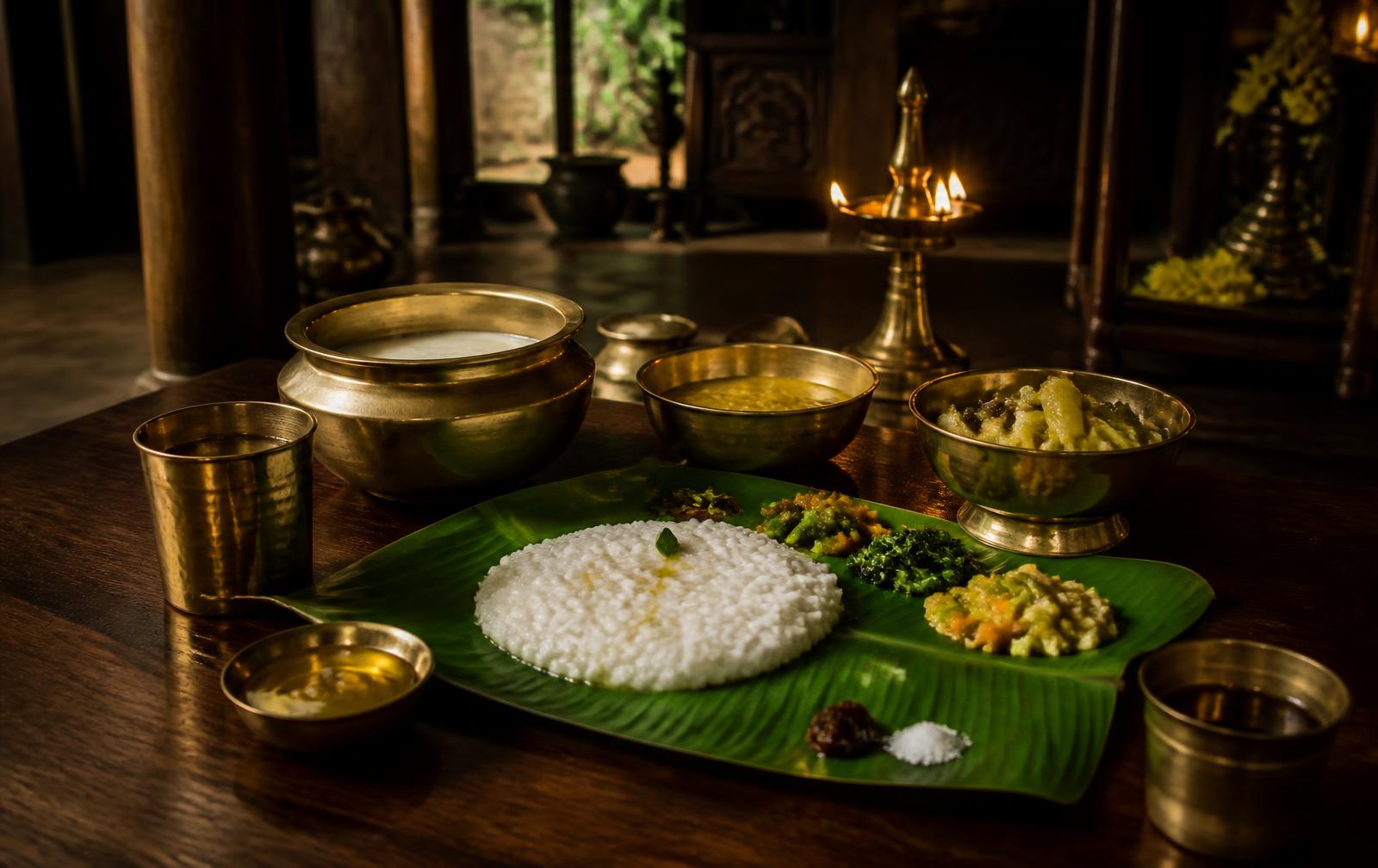
Guests arriving for their first residential programme almost always ask about the therapies. Very few ask about the food. Within three days, the food is what they want to talk about — because it is the part of the programme that is working on them at every hour of the day, not only during the two hours they spend on the treatment table.
This guide explains how Ayurvedic diet is actually constructed during a Kerala Panchakarma stay: what the principles are, what changes from stage to stage, what a typical day's meals look like, and what to expect when you go home. It is written to be useful before you arrive, not to replace the plan your physician will write for you.
Why diet decides how well treatment works
Ayurveda locates the origin of most chronic illness in digestion. When agni — the digestive fire — is strong, food is converted cleanly into tissue. When it is weak or erratic, part of every meal is left incompletely processed. That residue is called ama, and the tradition treats it as the raw material of disease: it is sticky, it obstructs the channels, and it settles wherever the body is already vulnerable.
Panchakarma exists to remove accumulated ama and to reset the doshas that carry it. If the diet during that process keeps producing more ama, the therapies are working against the kitchen. This is the whole logic behind the light, warm, simple food served in a traditional Ayurvedic hospital — it is not austerity for its own sake. It is a deliberate reduction of digestive load so that the body's energy goes into clearing rather than processing.
When the diet is right, medicine is rarely needed. When the diet is wrong, medicine rarely works.
The six tastes, and why every meal contains them
Ayurveda classifies food by taste — sweet, sour, salty, pungent, bitter and astringent — because taste is a reliable guide to how a food will behave in the body. Each taste either increases or reduces each dosha, and a well-composed meal uses that arithmetic deliberately.
- ◆Sweet (rice, ghee, milk, ripe fruit) builds tissue and calms Vata and Pitta; too much increases Kapha.
- ◆Sour (lime, tamarind, buttermilk) stimulates appetite and digestion; too much aggravates Pitta.
- ◆Salty (rock salt) supports digestion and retains moisture; excess disturbs Pitta and blood.
- ◆Pungent (ginger, pepper, mustard) kindles agni and clears channels; excess dries and irritates.
- ◆Bitter (bitter gourd, neem, turmeric) cleanses, reduces Kapha and Pitta; excess depletes.
- ◆Astringent (lentils, pomegranate, plantain) absorbs and firms tissue; excess causes dryness and constipation.
A Kerala Ayurvedic meal characteristically includes all six in one sitting, but not in equal measure. The proportions are shifted according to your constitution and the imbalance being treated — which is why two guests seated at the same table can be given noticeably different plates.
How your diet is personalised
The physician builds your diet from four inputs, in this order.
1. Your constitution (prakriti)
Your inborn balance of Vata, Pitta and Kapha determines your baseline. A Vata-predominant person is given food that is warm, moist, grounding and generously oiled. A Pitta-predominant person is given cooling, mildly spiced, non-fermented food. A Kapha-predominant person is given light, warm, dry, well-spiced food with less rice and less dairy.
2. The current imbalance (vikriti)
Constitution sets the default; the present complaint overrides it. Someone with a naturally Vata constitution who arrives with active skin inflammation will be fed for the inflammation first. This distinction is why generic dosha quizzes online often mislead — they describe prakriti and ignore vikriti.
3. The strength of your digestion
Before anything else is decided, the physician assesses appetite, bowel pattern, coating on the tongue, heaviness after eating and energy in the hours following a meal. Weak digestion means the first days of food are deliberately plainer and smaller than most guests expect.
4. The stage of treatment
This is the input that changes most often — sometimes daily. The same guest eats very differently during oil preparation, during a purification procedure and during the recovery days that follow it.
What you eat at each stage of Panchakarma
Purva Karma — the preparation days
During internal oleation (snehapana) and the massage and steam that accompany it, the diet becomes light and warm so that the medicated ghee is absorbed rather than competing with a full stomach. Warm water is sipped throughout the day. Curd, cold drinks, raw salads, fried food and heavy proteins are removed. On days when a measured dose of ghee is taken, food may be reduced to a single light meal once the previous dose has been fully digested.
Pradhana Karma — the main procedures
On the day of a purification procedure such as Virechana or Nasya, food is minimal and precisely timed, and eating is guided hour by hour by the attending physician. Warm, thin rice gruel — kanji — is the standard first food afterwards, because it rehydrates, requires almost no digestive effort and gently rekindles agni.
Paschat Karma — the return to normal food
This is the stage most often rushed at home, and the one Kerala hospitals take most seriously. Samsarjana Krama is a staged reintroduction of food over roughly three to seven days: thin gruel, then thicker gruel, then soft rice with mung soup, then rice with light vegetables, then a normal Ayurvedic diet. Skipping these steps after a cleanse is one of the most reliable ways to undo its benefit.
- ◆Day 1 — thin kanji, warm, lightly salted, in small quantities.
- ◆Day 2 — thicker kanji, mung water, a little ghee.
- ◆Day 3 — soft rice with mung dal soup and a trace of rock salt.
- ◆Day 4 to 5 — soft rice with steamed vegetables and mild spicing.
- ◆Day 6 onward — the full Ayurvedic diet appropriate to your constitution.
A typical day of meals during a residential stay
Portions, timings and specific items vary by prescription, but the shape of the day is consistent.
- ◆On waking — warm water, sometimes with ginger, cumin or coriander depending on the dosha being addressed.
- ◆Breakfast (around 8am) — warm rice gruel, ragi porridge, steamed rice preparations or soft idli, with a boiled vegetable.
- ◆Mid-morning — herbal decoction or warm water; fresh fruit only if digestion allows and never with milk.
- ◆Lunch (12.30 to 1pm) — the largest meal of the day, when digestive fire is strongest: rice, mung or lentil preparation, two or three cooked vegetables, buttermilk if permitted, ghee, and a small amount of pickle or chutney for the sour and pungent tastes.
- ◆Afternoon — warm herbal tea; a light snack such as steamed banana if prescribed.
- ◆Dinner (6.30 to 7.30pm) — deliberately lighter than lunch: soft rice or gruel, a soup or thin dal, one cooked vegetable.
- ◆Before sleep — warm milk with turmeric or nutmeg where Vata needs settling, or simply warm water.
Meals are eaten warm, freshly cooked, unhurried and without screens. Nothing is served reheated from the previous day. Coconut oil, coconut, curry leaf, ginger, black pepper, turmeric, cumin, fenugreek and rock salt do the seasoning — the same ingredients a Kerala household has used for generations, used here with therapeutic intent.
What is withheld, and why
Restrictions during treatment are called pathya-apathya, and they are specific rather than moralistic. Each exclusion has a stated reason.
- ◆Curd and cold drinks — they block channels and dampen digestive fire during a cleanse.
- ◆Raw salads and cold food — harder to digest than the same vegetables cooked, and aggravating to Vata.
- ◆Fried and heavily oiled food — the programme is already supplying medicated fats in measured doses.
- ◆Refined sugar, packaged snacks and carbonated drinks — they produce ama and disturb appetite rhythm.
- ◆Red meat, alcohol and tobacco — they add load precisely when load is being removed.
- ◆Coffee and strong tea — usually reduced or replaced with herbal decoctions; caffeine withdrawal is easier here than at home.
- ◆Incompatible combinations (viruddha ahara) — notably milk with fish, milk with sour fruit, and honey heated to high temperatures.
Vegetarian food is the norm during treatment, though Ayurveda is not doctrinally vegetarian and prescribes meat soup in specific depleted states. Vegan, gluten-free and allergy-specific requirements are straightforward to accommodate — tell us in advance and the kitchen and the physician plan around them together.
Taking the diet home
The benefit of a residential programme is consolidated in the eight to twelve weeks after it ends, and diet is the main instrument. What we send you home with is short and deliberately achievable: eat your largest meal at midday, eat warm and freshly cooked food, keep dinner light and early, drink warm water, leave three to four hours between meals, and reserve the exclusions that matter most for your specific imbalance.
Most guests find that two or three of these habits hold permanently, and that this is enough to keep the results of treatment in place. Perfection is not the goal. Consistency in the direction of warmth, simplicity and regular timing is.